Office Clearance in Plumstead

Our office clearance in Plumstead is set up for businesses that need desks, chairs, filing cabinets, storage units, IT peripherals and general workplace contents removed in a tidy, organised way. We handle clearances for small offices, shared workspaces and larger commercial rooms, with a focus on separating reusable items from waste where practical. That can help when a room is being reconfigured, a lease is ending or a suite needs to be cleared before refurbishment. The work is planned around the layout on site, so access routes, lift use and loading arrangements are considered before removal begins.
Because every office contains a different mix of fittings and equipment, the service is best approached as a managed clearance rather than a simple collection. Some jobs involve bulky boardroom furniture, while others centre on archive storage, broken office chairs, boxed stationery or redundant reception items. We can remove single items or larger volumes, but the aim is always to leave the area ready for the next stage of use. If you need a quick starting point, begin with the rooms that matter most and work outward from there.
The pages below explain related clearance options, pricing information and practical details. Use them to decide whether the job needs a full office clearance, a more focused furniture removal, or a mixed waste clearance for a broader commercial space. If you already know what has to go, you can simply request a quotation and outline the items, floors involved and access conditions.
Office clearance services and what they cover
Office clearances often involve far more than moving a few pieces of furniture. Workspaces can include desks, cupboards, monitors, printers, shelving, whiteboards, loose paperwork and packaged stock, all of which may need different handling. Our approach is to keep the process orderly so that the right items are removed, reusable pieces are separated where possible and the room is left in a usable state. That makes the service suitable for routine office changes as well as more complete commercial clear-outs.
Where there are mixed contents, it can help to think in categories. Fixtures and fittings are usually handled differently from everyday rubbish, and larger boardroom or storage items need a different lifting plan from lighter loose items. To keep the job clear, the most useful information is often the type of furniture, the quantity, and whether items are on the ground floor or need carrying through stairwells or lifts. Clear instructions save time on site and help the team arrive with the right equipment.
Office clearance is the main service page, but it is not the only useful route when the contents are more specific. A focused room of workstations may suit furniture removal, while a broader emptying job can be better handled as a general waste clearance. Where there are items from multiple rooms, one coordinated plan is usually simpler than booking several separate collections.
Furniture and equipment removal for workplaces

Many office clearance jobs are really about furniture and equipment removal. Desks, task chairs, meeting tables, pedestal drawers and storage units can take up a great deal of floor space, and their size can make the job awkward without a proper plan. Our service is intended to remove these items efficiently while keeping corridors, doorways and shared entrances in mind. If items are still usable, they may be kept separate from waste where that can be done responsibly and within the limits of the job.
Workplace equipment often needs a slightly different approach from ordinary furniture. Printers, monitors, desktop towers and cabling can be grouped together, but they should not be treated as an afterthought because they may require sorting before removal. Good sorting at the outset helps prevent confusion later, especially where the office contains a mixture of old and current equipment. A clearer handover also makes it easier to keep the workspace in order while items are being moved out.
Useful related pages include furniture clearance for broad item removal and furniture disposal where the focus is on getting unwanted pieces taken away. Those pages can help if the office job is dominated by seating, desks or storage furniture rather than a wider clearance of all contents. For a mixed commercial load, the right choice is usually the page that best matches the dominant type of item.
Useful page routes for mixed commercial clearances
Commercial clearances are not always limited to one room type. A business may need a combination of office furniture removal, stock clearance and the taking away of old fixtures after a fit-out change. In those cases, a more general service page can be helpful because it reflects the broader mix of items and gives a clearer starting point for a quotation. This is especially useful where the job includes both furniture and everyday waste.
When office contents extend into stores, corridors, archive spaces or adjoining rooms, the balance between dedicated furniture handling and general waste removal becomes more important. You may find it easier to organise the work by area rather than by item type, particularly if the premises are being vacated or reorganised. Choosing the page that matches the main load keeps the enquiry straightforward and avoids unnecessary back-and-forth.
If the clearance is part of a wider premises tidy-up, it may also be sensible to look at business waste removal for ongoing commercial waste or waste removal when the job is more general. For larger single-location clearances, the more focused office page remains the best fit, but these supporting pages can help if the site contains a wider mix of unwanted material.
Planning an office clearance in practical terms

Before a clearance begins, it helps to identify which items are staying, which are being removed and which need to be checked separately. That can include archiving paperwork, isolating IT equipment, confirming whether drawers or cabinets are empty and deciding if any furniture has to be dismantled for access. A clear plan reduces interruption to the building and helps avoid unnecessary handling. Where an office contains more than one department, labelling zones or rooms is often the simplest way to keep everything in order.
There are two practical points that make most quotation requests easier: a short description of the items and a note about access. If the office is on an upper floor, if there is limited parking or if lifting equipment is needed, that information affects how the work is arranged. It is also useful to mention whether the clearance must take place around normal business hours or after staff have vacated. These details do not need to be extensive, but they do help shape an accurate quote.
The quotation process becomes even simpler when the job is split into clear groups, such as desks and chairs, storage units, loose waste and specialist equipment. That sort of breakdown makes it easier to decide whether the most suitable route is a full office clearance or a narrower furniture page. If you are ready to move forward, send the room list and access notes together rather than in separate messages. That gives a much clearer picture of the work.
Furniture-heavy jobs and disposal choices
Some offices contain more furniture than general waste, and that changes how the clearance is best handled. Desks, shelving and cabinets are bulkier than loose rubbish, so moving them safely often depends on the order in which items are taken out. Larger items may also need partial dismantling to pass through narrow corridors or shared doorways. A clear furniture-focused plan helps the job stay controlled and can reduce disruption in occupied buildings.
Disposal choices depend on the condition and type of the items involved. Reusable furniture can be separated from broken or damaged pieces where appropriate, while items that are no longer fit for use need to be dealt with as waste. This is one reason the terms clearance and disposal are not quite the same: one describes the removal task, while the other focuses on what happens to the items after they are taken away. Both are useful, but they suit different enquiries.
If your main concern is old seating, desks or cupboards, the pages for furniture clearance and furniture disposal are the closest supporting routes. They are especially relevant when a room is being emptied for new fittings, or when the office contents are mostly bulky items rather than paperwork and loose rubbish. Where the whole workplace is being cleared, the broader office route is usually more appropriate.
About Plumstead
Plumstead is a district in south-east London within the Royal Borough of Greenwich, known for its long-standing mix of residential streets, rail connections and historic estates. The area’s built environment reflects several layers of growth, from older housing close to the town centre to later nineteenth- and twentieth-century development that spread across the surrounding slopes. Plumstead Common remains one of its most recognisable open spaces, a large stretch of green that gives the district a distinct landscape and a sense of separation from the denser parts of inner London. The common has long been associated with public recreation and local identity, while nearby roads and terraces show the gradual transition from village origins to a suburban London district. Plumstead Road forms an important corridor through the area, and the railway station has helped connect it with other parts of the capital for well over a century. The locality also has links with Woolwich and the wider Thames-side landscape, which are historically significant for industry, military activity and transport. Churches, schools and local parades add further texture to the streetscape, while the nearby riverfront and green spaces contribute to the area’s varied character. Although it is now part of a much larger borough, Plumstead retains a recognisable neighbourhood identity shaped by its topography, housing forms and public open land. That combination of urban growth and open space gives the district a layered appearance that is typical of many south-east London places, yet still distinctive in detail and atmosphere.
Commercial clearances for offices, stores and back rooms

Office clearance work is often part of a bigger commercial picture. Back rooms, small stock areas, print rooms and storage cupboards can all generate material that has to be removed at the same time as desks and seating. In those cases, it makes sense to treat the premises as one connected workspace rather than isolating each item type. That approach is more efficient when the aim is to hand back a floor, prepare for refurbishment or bring an occupied site back into order.
Where useful, we can talk through the difference between a standard office clearance and a broader commercial waste job. The distinction matters because some premises contain a true office plus ancillary rooms, while others are really mixed-use units with work tables, packaging, archive items and general refuse. If you need to compare options, the business waste removal page is a sensible companion to the office service, and the waste removal page is helpful for less specialised loads.
For jobs that also involve fixtures from non-office areas, such as racking, broken shelving or items from shared storage, a combined clearance can be planned so that each section is handled in the right order. That is often the simplest way to keep the property clear and avoid moving items twice. If your site has several rooms with different contents, make a brief note of each one and we can shape the enquiry around the actual layout.
What to include when asking for a quotation
A good quotation request does not need to be long. The most useful details are the type of office, the approximate amount of furniture or waste, the floor level and whether there are access restrictions. If items include filing cabinets, reception pieces, meeting tables or IT equipment, it helps to mention those separately. The clearer the description, the easier it is to match the job with the right clearance approach and equipment.
Photographs can be useful when they show the rooms as they are now, especially if the clearance includes several connected spaces or bulky pieces that may need dismantling. It is equally useful to know whether the work must be completed before new contractors arrive, before the end of a tenancy or after staff have already moved out. Those practical points influence planning, but they do not need to turn into a long explanation. A concise message is usually enough to get the process moving.
If you are ready to proceed, contact us with the room list and the items that need removing. If you prefer to review the likely scope first, the office and furniture pages above give a good indication of where the job fits. Either way, the aim is to make the request straightforward, so the quotation reflects the actual clearance rather than a guess.
Recycling and responsible handling
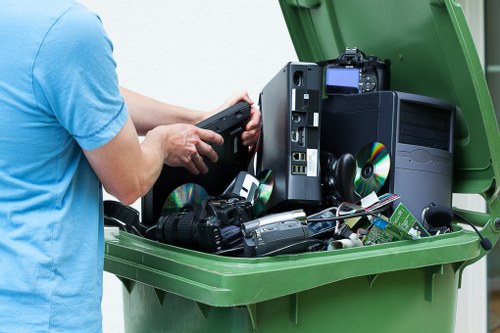
Not every item from an office clearance is treated in the same way. Some contents may be reusable, some may be suitable for recycling and some will need disposal as waste. A careful clearance process helps separate those streams where that is practical and appropriate. Office furniture, for example, often includes metal, wood and mixed materials, while smaller items may contain plastics, paper or electrical components. Sorting them correctly is part of doing the job properly.
The same principle applies to mixed commercial clearances. Where a workspace contains broken furniture, boxes, packing material or obsolete office items, the method matters as much as the final removal. A well-planned job should avoid unnecessary handling and keep items moving in a sensible order from room to vehicle. If you are looking at wider good-practice information, recycling and sustainability gives a useful overview of how material can be handled with care.
For businesses that need a simple, organised way to clear premises in Plumstead, the practical route is to match the main load with the right service page, then ask for a quotation based on the rooms, access and item types involved. That keeps the enquiry clear, whether the job is a single office, a suite of rooms or a larger commercial clearance that includes furniture, equipment and general waste. Send the details when you are ready, and the next step can be planned from there.