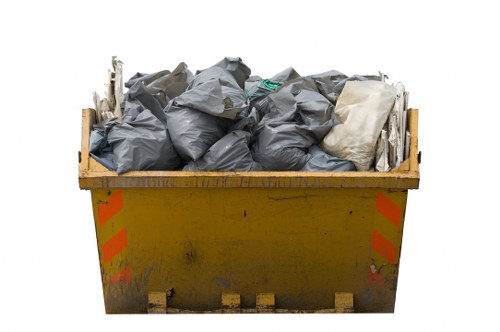
Health and Safety Policy for Office Clearance Plumstead
This health and safety policy sets out the principles and working arrangements that govern a professional office clearance Plumstead operation. It applies to all office tidy-out activities carried out by the clearance team, contractors, subcontractors and any temporary staff engaged to support an office rubbish clearance or commercial waste removal project. The policy emphasises risk assessment, training, equipment safety and environmental care so that each removal, disposal or recycling task is conducted without injury, property damage or unnecessary environmental impact. Every employee and representative must understand and follow the procedures described here to maintain safe, compliant operations.Scope and Responsibilities
The policy covers office clearance services, including furniture removal, electronic waste handling, confidential document disposal, and general rubbish collection. Management retains overall responsibility for health and safety, ensuring adequate resources and oversight, while supervisors are responsible for day-to-day implementation. Every operative engaged in office clearance services in Plumstead or surrounding service areas must take personal responsibility for safe working practices. Supervisors will ensure that site-specific risk assessments are completed before work begins and that control measures are implemented and monitored.
Risk Assessment and Safe Systems of Work
Risk assessments identify hazards such as manual handling, trip and fall risks, hazardous substances in electronic waste, and traffic interactions during loading and unloading. Safe systems of work include method statements, use of mechanical aids, provision of personal protective equipment (PPE) and exclusion zones where necessary. Teams conducting an office clearance should follow a written method statement that outlines the sequence of tasks, required PPE, and emergency arrangements. Regular toolbox talks reinforce hazard recognition and ensure the workforce remains alert to changing site conditions. Operational controls include proper vehicle loading practices, secure stacking of materials, and separation of recyclable items. Vehicles used for rubbish collection and office furniture removal must be loaded to manufacturer limits and secured to prevent shifting. Operatives should wear appropriate PPE such as gloves, hi-vis clothing, safety boots and back supports as required. Training in manual handling techniques, safe use of trolleys and lifting aids, and awareness of hazardous materials is mandatory prior to independent work on client sites.
Communication is critical. Teams must maintain clear lines of communication on-site and with any building management. Written permits or client approvals should be obtained where required, and operatives must be briefed on site layout, fire exits and assembly points. The policy also promotes the correct handling of confidential materials: boxes of documents must be secured and processed in line with data protection principles before being recycled or destroyed by approved methods during an office clearance operation.
Waste management and environmental protection are core elements of this health and safety policy. The aim is to minimise landfill by maximising reuse and recycling of office contents. Clear segregation at source — for example separating cardboard, metal, general rubbish, and electronics — reduces cross-contamination and improves recycling rates. Where hazardous materials are encountered, such as certain batteries or chemicals, they must be isolated and handled according to hazardous waste procedures and transferred only to authorised disposal facilities.
 Training, Competence and Supervision
All personnel involved in office clearance operations should demonstrate competence through documented training and assessments. Training records must be maintained and updated regularly. Supervisor oversight includes daily checks of PPE, equipment condition and compliance with method statements. Emergency procedures must be rehearsed and available, and first aid provision arranged depending on the scale of the clearance. Contractors must provide proof of competence where subcontracted to support larger office clearance projects.
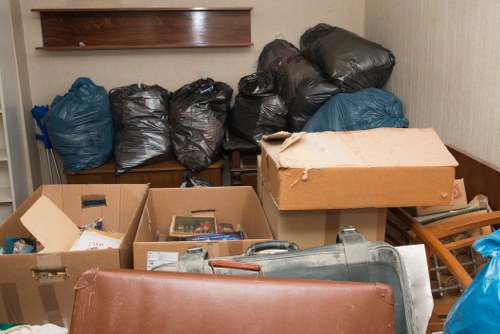 Practical measures to reduce risk include:
- Pre-job site inspection and written risk assessment
- Use of lifting aids, trolleys and mechanical equipment
- Proper segregation and labelling of recyclables and hazardous items
- Secure transport practices and vehicle checks before departure
- Routine maintenance of tools and PPE checks
Monitoring, Review and Legal Compliance The policy will be reviewed annually and after any incident to ensure it remains effective and aligned with current health and safety standards. Incidents, near-misses and observations must be recorded and investigated to identify root causes and corrective actions. Compliance with applicable health and safety regulations, waste handling legislation and environmental standards is mandatory, and the company will cooperate fully with relevant authorities during inspections. Continuous improvement is encouraged by regular audits, refresher training and updating procedures as new best practices are identified.
The overarching goal of this document is to make every office clearance, whether a small tidy-up or a full office relocation and rubbish clearance, safe for people and respectful of the environment. By following the documented procedures, applying reasonable controls and fostering a safety-first culture, the risks associated with clearance operations are reduced. Teams are expected to act responsibly, report hazards, and contribute to a workplace where safety and efficient waste management are part of every task.
Implementation of this policy supports operational excellence, protects staff and clients, and ensures that office clearance operations are delivered responsibly and sustainably across the service area.
Signed and approved by management as the governing health and safety statement for office clearance activities.
