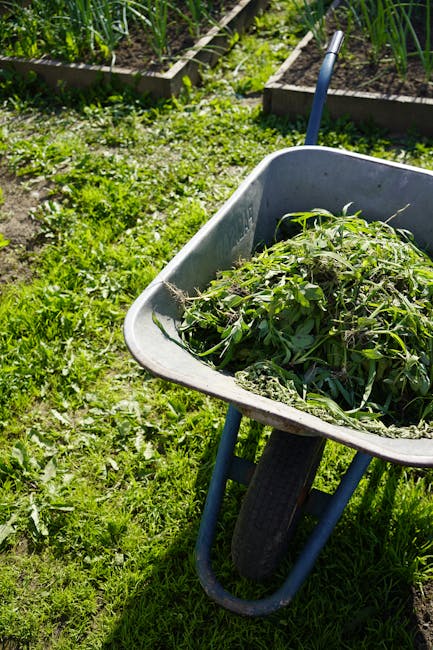
Garden waste removal near Plumstead Common: a practical local guide
If your garden has started to look more like a holding area for hedge cuttings, old soil, branches, and that stubborn pile of bagged clippings by the fence, you are not alone. Garden waste removal near Plumstead Common is one of those jobs people put off until it becomes impossible to ignore. Then, suddenly, the path is blocked, the compost heap has turned into a mountain, and the "I'll sort it next weekend" plan has run out of weekends.
This guide explains how garden clearance works, what can be removed, when it makes sense to book a professional service, and how to avoid common mistakes. It also covers practical considerations like recycling, access, timing, and what a good local provider should be able to do for you. If you want a broader overview of related services, you can also take a look at garden clearance and the wider waste removal service options.
Table of contents
- Why garden waste removal near Plumstead Common matters
- How garden waste removal works
- Key benefits and practical advantages
- Who this is for and when it makes sense
- Step-by-step guidance
- Expert tips for better results
- Common mistakes to avoid
- Tools, resources and recommendations
- Law, compliance, standards, and best practice
- Options, methods, and comparison table
- Case study or real-world example
- Practical checklist
- Conclusion
- Frequently asked questions
Why Garden waste removal near Plumstead Common matters
Plumstead Common has that very London mix of front gardens, back gardens, compact outdoor spaces, and the occasional bigger plot that always seems to produce more clippings than anyone expected. A single weekend of pruning can leave you with sacks of leaves, cuttings, turf, soil, and broken pots before you've even finished the tea. Garden waste removal matters because that material is bulky, messy, and awkward to shift safely if you do not have the right vehicle or lifting help.
There is also the simple reality of keeping a garden usable. Piles of organic waste attract pests, hold damp, and get in the way of mowing, planting, or patio cleaning. Left too long, it can become a maintenance job in its own right. Truth be told, once garden waste starts spreading across a driveway, it tends to multiply in your mind as well as in the corner of the garden.
For local households, landlords, and small businesses with outdoor areas, proper clearance also helps protect shared spaces. If you are dealing with mixed waste after exterior works, it may be worth reading about builders waste clearance too, because a lot of garden projects create a blend of green waste and renovation debris. Different waste streams often need different handling, and that's where a well-planned removal service saves you hassle.
Quick takeaway: if the waste is more than you can easily load, sort, and transport yourself, professional garden waste removal is usually less stressful, less messy, and often cleaner in terms of final results.
How Garden waste removal near Plumstead Common works
The process is usually straightforward, but the details matter. A reliable garden clearance service will normally start by understanding what type of waste you have, how much there is, and whether there are any access issues. A narrow side return, shared driveway, awkward stairs, or a garden at the end of a long terrace can all affect how the job is carried out.
In practice, the work often follows a simple pattern:
- You describe the garden waste or send photos.
- A quote is offered based on volume, material type, and labour.
- The team arrives with the right vehicle and equipment.
- Items are loaded carefully, with reusable or recyclable material separated where possible.
- The garden is left swept or tidied, depending on the service agreed.
Not all waste is handled the same way. Grass cuttings, leaves, hedge trimmings, branches, soil, roots, old sleepers, broken fencing, and pots all behave differently once they are loaded into a van. Wet clippings compact heavily; branches are bulky; soil is heavy; and mixed waste can quickly eat into capacity. That is why a quote based only on "a few bags" can be misleading if there are also logs, planters, or heavy garden rubble involved.
If your garden work has involved clearing out stored items too, some people combine the job with a garage clearance or even a broader home clearance. That can be useful when the garden and storage spaces have become a bit entangled over time. Happens more often than you'd think.
For people who want a one-stop solution, it helps to ask whether the provider can also assist with furniture disposal or related household items if the garden project is part of a bigger clear-out.
Key benefits and practical advantages
There are several reasons people choose professional help rather than hiring a van and doing it themselves. Some are obvious, some less so.
- Less physical strain: heavy bags of soil, wet cuttings, and broken branches are awkward and can be surprisingly tiring to move.
- Faster results: a job that might take you two or three trips can often be handled in one visit.
- Cleaner finish: a good clearance is not just about taking rubbish away; it also helps restore usable space.
- Better sorting: recyclable green waste can often be separated from general rubbish more effectively.
- Fewer transport headaches: no need to borrow a trailer or worry about fitting brambles into a family car. Which, let's face it, is never elegant.
There is also a planning benefit. Once the waste is gone, you can actually see what the garden needs next. Maybe it is fresh topsoil, perhaps a new border, or maybe just the relief of having a clear patio again. Small space, big difference.
For business owners or landlords with managed outdoor areas, garden clearance can support a better first impression. If you oversee multiple properties or a commercial site, it may be sensible to look at business waste removal as part of your longer-term maintenance approach.
Who this is for and when it makes sense
Garden waste removal near Plumstead Common is useful for a wide range of people, not just those with large gardens. In fact, smaller gardens often create the most frustrating waste because there is nowhere to stash it while you decide what to do next.
This service tends to suit:
- homeowners clearing after pruning, landscaping, or seasonal tidy-ups
- tenants or landlords restoring outdoor space between lets
- older residents who can manage the garden work but not the lifting and transport
- busy families who need the space back quickly
- small businesses with courtyards, shared outdoor areas, or frontage planting
- people who have mixed garden and household clutter to remove
It also makes sense after weather events. Wind, storms, or a particularly enthusiastic pruning session can leave a tangled, wet mess that takes far longer to clear than expected. If you are already dealing with damaged fencing, broken storage, or general outdoor clutter, a broader property clearance may be more efficient than trying to chip away at it bit by bit.
And if the job has grown beyond one corner of the garden, you may find it helpful to compare it with house clearance or loft clearance where the wider property is also due a reset. It is not unusual for one tidy-up to reveal three more. Gardening has a funny way of doing that.
Step-by-step guidance
If you want the smoothest possible experience, a little preparation goes a long way. Here is a practical approach that works well for most garden waste jobs.
1. Separate green waste from mixed waste
Start by splitting pure garden waste from anything else. Leaves, grass, hedge trimmings, and small branches are one thing. Old flowerpots, broken tools, plastic edging, rubble, and timber are another. This helps with pricing and recycling, and it avoids confusion on the day.
2. Check access before you book
Measure gates, note stairways, and think about where a vehicle can stop. If access is tight, say so early. A good provider would rather know upfront than discover a blocked pathway after arrival. A 10-minute conversation can save a lot of carrying.
3. Estimate volume honestly
People often underestimate garden waste. A heap that looks like "a few bags" can easily become a van load once it is cut down and packed. Be honest about how much is there, even if it feels a bit embarrassing. Nobody is judging your ivy. Well, not much.
4. Ask what is included
Some services include loading, sweeping, and recycling; others may be more limited. Ask whether the quote covers labour, disposal, parking complications, and any extra handling for soil or heavy items.
5. Make the site safe before collection
Move pets, clear loose tools, and keep children away from the work area. If there are thorns, broken glass, or hidden bits of wire in the pile, flag them before the team starts lifting.
6. Confirm the final result
Before the team leaves, walk the area and check that the agreed space is clear. If there is a swept patio or a final rake-through included, make sure you understand what "tidy" means in that context. Clarity saves awkwardness.
If you need to discuss booking details or a tailored collection, the contact page is the sensible next step. For cost-related questions, the pricing and quotes page is also worth reviewing.
Expert tips for better results
A few simple habits can make a garden clearance easier, cheaper, and less stressful.
- Cut large branches down first if you are doing part of the prep yourself. Compact material loads better.
- Keep soil separate where possible. Heavy material changes the way the job is priced and loaded.
- Bundle similar waste together so there is less sorting on the day.
- Book after the main garden work, not before. Otherwise you may end up creating more waste after the collection.
- Think about recycling early if you are removing timber, metal edging, pots, or old planters.
One useful habit is to keep a simple "garden waste corner" during a longer project. It stops cuttings drifting everywhere and makes the final load-out feel less chaotic. Not glamorous, but very effective.
For people who are trying to improve sustainability, it helps to choose a provider that explains how waste is sorted and recycled. You can read more about this on the recycling and sustainability page. The strongest services usually make this part of the process feel normal, not like a sales line.
Common mistakes to avoid
Most problems with garden waste removal come from a few predictable oversights. The good news is that they are easy to avoid once you know them.
- Mixing garden waste with general rubbish: this can complicate sorting and pricing.
- Leaving access issues until the day of collection: steep steps, locked gates, and narrow alleys matter.
- Underestimating wet weight: damp soil and soaked cuttings are much heavier than they look.
- Assuming everything is green waste: pots, treated timber, and fencing may need different handling.
- Not checking what the quote includes: loading, labour, and disposal should be clear.
Another common one: piling waste against the fence "just for now" and then forgetting it for two months. By the time people call, it has settled, weathered, and sometimes rooted into the ground a bit. Nature is helpful until it isn't.
If you are unsure whether your load is more garden waste or more mixed clearance, ask before booking. A decent provider will talk it through plainly rather than hiding behind jargon. That's often the simplest sign you're dealing with someone reliable.
Tools, resources and recommendations
You do not need a shed full of specialist kit to prepare for garden waste removal, but a few items make the job easier.
- Heavy-duty rubble sacks or garden waste bags for leaves, clippings, and small offcuts
- Gloves with proper grip for thorny cuttings or rough timber
- Secateurs and loppers to reduce bulky branches before collection
- Tarpaulin to keep piles together and protect paths
- Rake and broom for a final tidy-up
- Measuring tape if access or volume is likely to matter for the quote
For people deciding how to organise a bigger clear-out, it can help to compare garden clearance with other property services such as flat clearance or garage clearance. The point is not to bundle everything together by default, but to choose the simplest route for the actual job.
If your project has generated a lot of mixed household clutter alongside outdoor waste, the broader home clearance service may be the more efficient next step. That is especially true where storage spaces, outbuildings, and the garden are all linked. One job can quietly spill into another, and that's okay.
Law, compliance, standards, and best practice
Garden waste removal is not just about lifting and loading. In the UK, responsible waste handling matters, and reputable services should be able to explain how they deal with it. You do not need to become a compliance expert, but a few basics are worth understanding.
Good practice usually includes:
- taking waste to an appropriate licensed facility or transfer route
- separating recyclable green waste from non-green material where feasible
- avoiding fly-tipping and untraceable disposal
- using sensible handling methods for sharp, heavy, or awkward waste
- providing clear terms so the customer knows what is included
For any service dealing with waste, it is sensible to check trust and safety information before booking. The pages on health and safety and insurance and safety are useful indicators of how a provider approaches responsibility. You want a team that treats your property carefully and does not improvise with ladders, sharp tools, or heavy bags in a cramped space.
It is also worth reviewing the terms and conditions so there are no surprises around access, cancellations, or what happens if the waste type changes on arrival. Not exciting reading, no, but it does prevent friction later.
And if you are simply comparing providers, a transparent business that explains its approach to about us information, payment and security, and service process usually gives you more confidence than a vague one-page listing ever will.
Options, methods, and comparison table
There are a few common ways to deal with garden waste near Plumstead Common. The right one depends on volume, timing, access, and how much sorting you want to do yourself.
| Option | Best for | Pros | Limitations |
|---|---|---|---|
| Self-haul to a site | Small, manageable loads with easy vehicle access | Direct control, useful for one-off trips | Time-consuming, physical effort, vehicle limitations |
| Private garden waste collection | Mixed or bulky waste, urgent clearances, awkward access | Fast, convenient, loading included | Usually costs more than self-haul, especially for heavy waste |
| Ongoing garden maintenance with periodic clearance | Regularly maintained properties | Prevents build-up, easier planning | Needs a routine and consistent scheduling |
| Mixed property clearance | Gardens with sheds, storage, or household clutter involved | Efficient for larger projects | Requires clearer sorting and a broader quote |
To be fair, most people just want the garden back without turning the weekend into a logistics exercise. If that sounds familiar, a professional collection is usually the least stressful route. If the job is more than garden waste alone, a broader clearance plan can save time and repeated bookings.
Case study or real-world example
Here's a common local-style scenario. A homeowner near Plumstead Common finishes a spring tidy-up after a long spell of rain. The cuttings are too wet to bag neatly, the old border edging has come up in pieces, and there are two broken planters, a pile of ivy stems, and a couple of sacks of compacted soil from a bed refresh. On paper, it sounds small. In the garden, it looks like a miniature construction site.
Rather than making several trips in a family car, the homeowner groups the waste by type, clears a path to the side gate, and asks for a removal service that can take mixed garden waste. The team arrives, assesses access, loads the heavier material first, and sweeps the patio before leaving. The result is simple but satisfying: the garden is usable again, and the remaining work is now about planting, not clutter.
That kind of outcome is what a good clearance service should feel like. Not dramatic. Just calm, efficient, and done properly. Sometimes that is exactly what you need after a long Saturday of pruning and bending over rose bushes.
Practical checklist
Use this checklist before booking your collection.
- Have I separated green waste from non-garden items?
- Do I know roughly how much needs removing?
- Is access clear for carrying and loading?
- Have I flagged heavy items like soil, turf, or rubble?
- Do I need help with related items such as fencing, planters, or outdoor furniture?
- Have I checked what the quote includes?
- Do I know whether sweeping or final tidying is included?
- Have I reviewed safety, insurance, and terms information?
- Is the waste ready on the agreed day?
- Have I arranged parking or access if needed?
Expert summary: the best garden waste removal service is not just the one that turns up quickly. It is the one that handles access sensibly, sorts waste properly, communicates clearly, and leaves your outdoor space genuinely easier to use afterwards.
Conclusion
Garden waste removal near Plumstead Common is really about restoring order to a space that has got ahead of you. Whether you have a modest pile of hedge trimmings or a bigger mix of soil, branches, and forgotten outdoor clutter, the right service can turn a messy corner into a garden you actually want to spend time in.
The key is to be clear about what you need, honest about volume and access, and sensible about the type of waste involved. That small bit of planning makes everything smoother. And when the last bag is gone and the patio is visible again, the relief is often bigger than people expect.
If you're ready to move from "I should sort that" to "it's done", it may be time to compare options and ask for a tailored collection.
Get a free quote today and see how much you can save.
Sometimes the best part of a clear garden is simply looking out the window the next morning and feeling, quietly, that the job is finally behind you.
Frequently Asked Questions
What counts as garden waste?
Garden waste usually includes grass cuttings, hedge trimmings, leaves, branches, weeds, plants, small roots, and similar organic material. It may also include some related outdoor items, but mixed waste can be priced differently.
Can you remove soil and turf?
Yes, but soil and turf are heavy, so they can affect labour and vehicle capacity. It is best to mention them in advance so the quote reflects the actual load.
Do I need to bag the waste before collection?
Not always. Bagging can help with organisation, but many services will collect loose waste if access allows. That said, bagging smaller items often speeds things up.
How is garden waste usually disposed of?
Responsible providers usually take it to a suitable facility for sorting, recycling, or composting where possible. Green waste is often handled separately from mixed rubbish.
Is garden waste removal better than taking it to the tip myself?
It depends on volume, transport, and your time. Self-haul can suit small loads, but professional removal is often easier for bulky, heavy, or awkward waste.
What if my garden waste is mixed with fencing, pots, or broken furniture?
Let the provider know. Mixed waste is common, but it may need a broader clearance approach. In some cases, related services like furniture clearance may be relevant too.
How much does garden waste removal near Plumstead Common cost?
Costs vary based on volume, weight, access, and the type of waste. A clear quote is the safest way to understand likely pricing rather than relying on rough assumptions.
Can I book garden clearance at short notice?
Often yes, depending on availability. Short-notice bookings are common for post-pruning jobs, end-of-tenancy clearances, or weather-related mess, but advance notice is always helpful.
Will the team sweep up afterwards?
Some services include a basic tidy-up or sweeping, while others focus only on loading and removal. It is worth checking this before you book so you know what to expect.
Is garden waste removal safe for thorny or sharp material?
It can be, provided the team uses proper gloves and handling methods. Mention thorny branches, wire, glass, or sharp broken items in advance so they can plan safely.
Do I need to be home when the collection happens?
Usually yes, or at least available by arrangement, especially if access needs to be shown or the waste needs confirming. Some providers may offer flexible arrangements, but it is best to ask directly.
What should I do before the removal team arrives?
Clear access, separate waste if you can, secure pets, and keep the area safe. A little preparation makes the visit quicker and helps avoid misunderstandings on the day.
Where can I find more information about the company and its policies?
You can review the about us page for background, and check complaints procedure, accessibility statement, and related policy pages if you want a fuller picture before booking.